

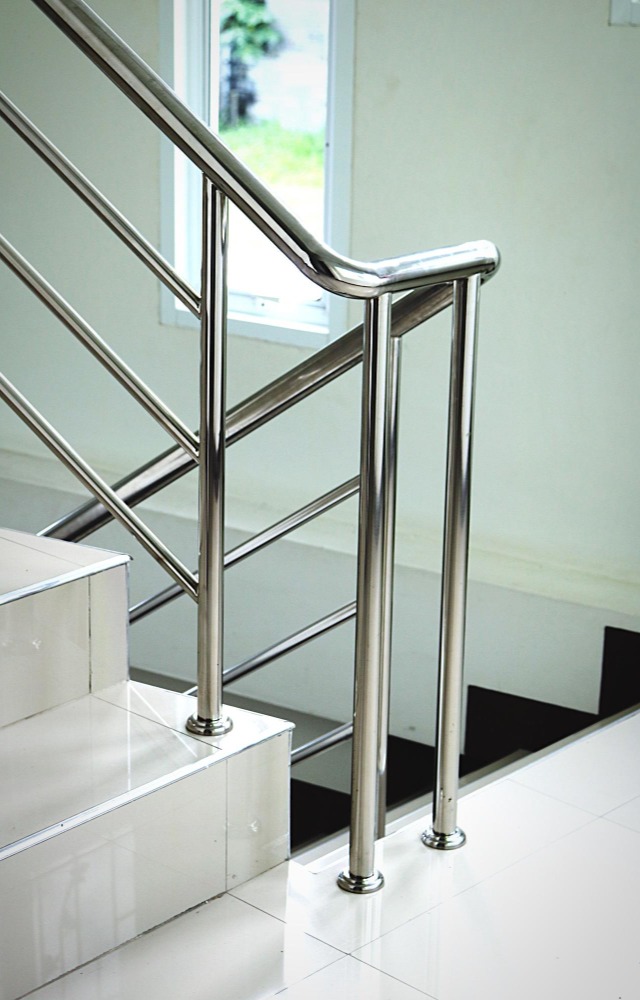
Stainless steel remains one of the most recognisable materials used in architectural railings. Its combination of strength, refined appearance, fabrication flexibility, and corrosion resistance makes it suitable for residential as well as commercial applications.
When sourcing from a Stainless Steel Railing Manufacturer in Rajkot, understanding material specifications is more useful than choosing a railing only from photographs or sample designs.
Stainless Steel Grade Is an Important Starting Point
Different stainless steel grades perform differently under varying environmental conditions. The appropriate material should be selected according to the installation environment, exposure, maintenance requirements, and engineering specification.
Buyers should therefore ask for clarity about the material used instead of relying only on the term 'stainless steel.'
This becomes particularly relevant for outdoor railings, balconies, terraces, entrances, and locations exposed to moisture or environmental contaminants.
Understand the Available Finishes
The surface finish can significantly change the character of a stainless steel railing.
Polished finishes provide a reflective appearance that works well in decorative interiors and premium architectural settings. Satin or brushed finishes create a softer appearance and may make everyday handling marks less visually prominent.
Projects may also use decorative surface treatments where the railing needs to complement specific interior finishes.
Stainless Steel and Glass Work Well Together
Glass can be incorporated into stainless steel railing designs through posts, clamps, spigots, handrails, or other fittings.
This combination is frequently used where designers want transparent barriers while retaining visible metallic detailing. Typical applications include staircases, balconies, office spaces, commercial properties, hotels, and residential developments.
Look Closely at Fabrication Quality
Even high-grade material cannot compensate for poor fabrication. Buyers should inspect:
- Joint consistency
- Welding quality
- Surface finishing
- Alignment of components
- Dimensional accuracy
- Fitting compatibility
- Edge finishing
- Overall visual uniformity
For large projects, repeatability becomes particularly important because inconsistencies across multiple railing sections are much easier to notice.
Match the System to the Project
Rajkot and other Gujarat markets include individual residences, industrial properties, commercial developments, hospitality spaces, and institutional projects. Their railing requirements can vary considerably.
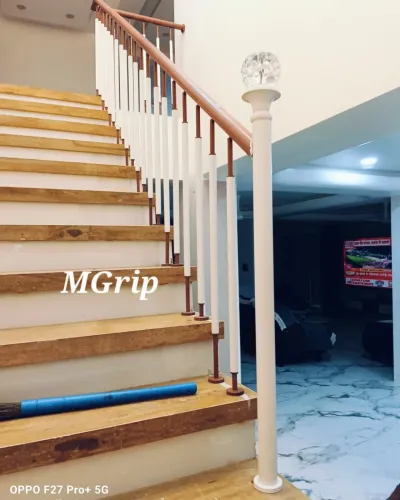
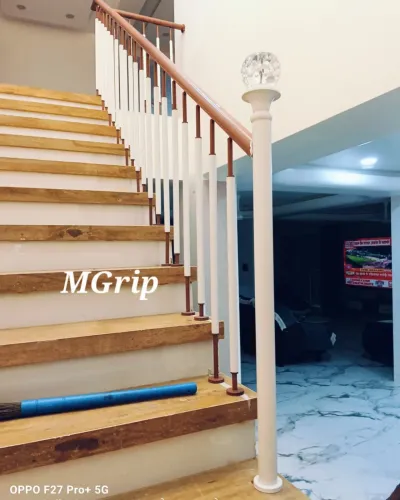
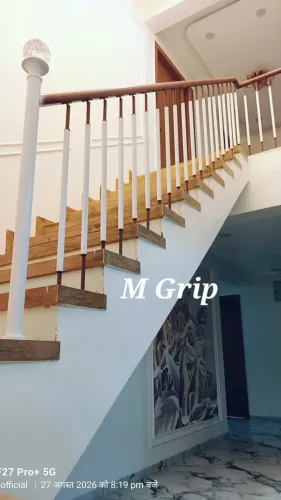
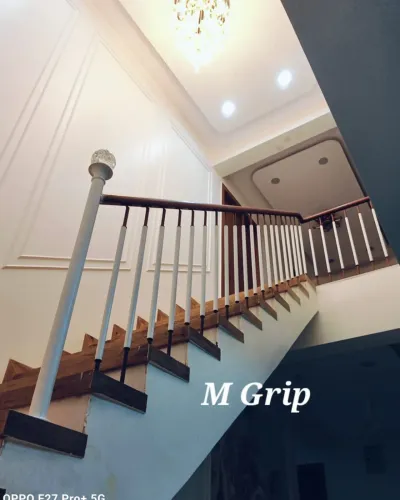
A staircase inside a residence may prioritise decorative appearance. A frequently used commercial railing may place greater emphasis on durability and maintenance. An outdoor balcony needs appropriate consideration of environmental exposure and structural requirements.
M Grip Railing Industries serves the architectural railing market with manufacturing solutions designed around such application-specific requirements.
The most effective approach is to define the railing's purpose before selecting profiles and finishes. Share dimensions, installation conditions, architectural drawings, glass requirements, and preferred appearance with the manufacturer.
Doing so helps ensure that the stainless steel railing is evaluated as a complete architectural system rather than simply as a collection of attractive metal components.